
Guide · Finance & terms
Commitment interest: the free period is negotiable, not fixed.
Most borrowers ask how high the rate is. The more expensive question is how long the free period runs.
10 September 2026 · approx. 9 min read · Enrico Li Fonti
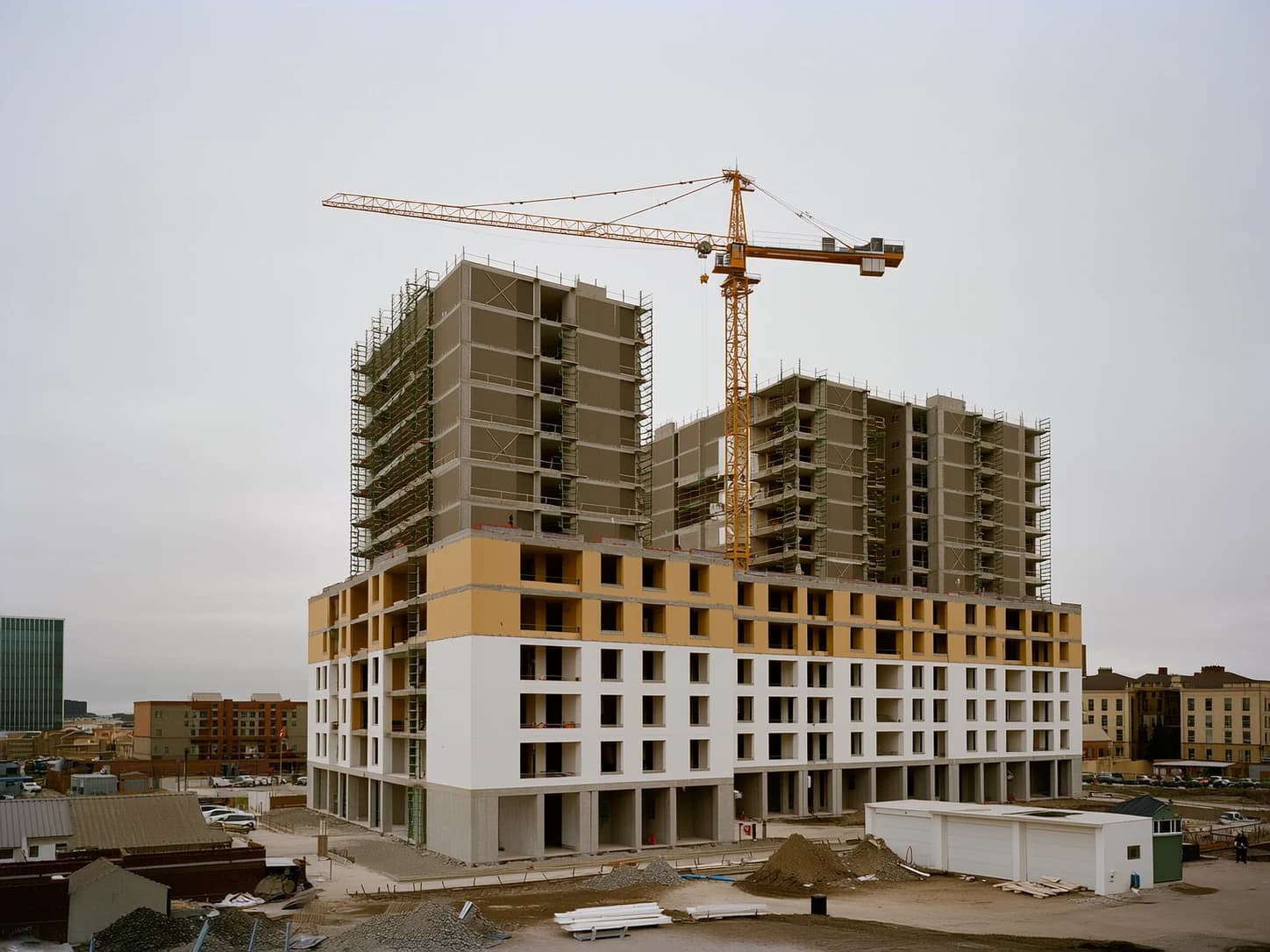
Symbolic image created with AI. It does not depict real people, properties or events.
The loan is approved, the build slips, and the bank charges interest on money that never moved.
Bereitstellungszinsen, commitment interest, is charged on the part of your loan that has been approved but not yet drawn. It starts only once the interest-free provision period has expired. Most lenders charge 0.25 percent per month, that is 3 percent per year. The length of the free period is the more important figure: according to a survey by Stiftung Warentest published in November 2025, more than half of all banks grant twelve free months, and around one in ten lenders includes 24. Neither the rate nor the duration is set by statute, both are set in your loan agreement. That makes them negotiable, and in our advisory work at ME Finance the period is where money is most often left on the table.
Two related topics are explicitly not covered here. The fixed-rate period governs how long the interest rate stays fixed. A forward loan secures a future rate for a refinancing. Both concern the price of the money. Commitment interest concerns something else, namely the time between approval and drawdown.
Commitment interest accrues on undrawn parts of the loan
A property loan is not always paid out in a single sum. For a new build, a purchase from a developer or a refurbishment, the money flows in instalments that track construction progress. Many months often pass between approval and the last of those drawdowns. Throughout that time the bank holds the full amount available. On the part not yet drawn it charges commitment interest.
The basis for this is the loan agreement. § 488 of the German Civil Code obliges the lender to make the amount available to the borrower „in der vereinbarten Höhe zur Verfügung zu stellen", in the agreed amount. Holding the money available is precisely the service being paid for. The bank refinances the funds and cannot lend them elsewhere during that time. The provision says nothing about the rate or the starting point. Both follow from the contract.
Projects with staged drawdowns are therefore the ones affected. When an existing property is bought with a single disbursement after the purchase contract, commitment interest rarely matters in practice. When you build, it is the norm. In contracts and price lists you will also see the singular Bereitstellungszins, the term Bereithaltungszinsen, or, less often and mostly in a commercial context, Bereitstellungsprovision. All mean the same thing.
The interest-free provision period sets the starting point
No lender charges commitment interest from day one. What is agreed is a window in which the approved money sits available at no cost. That window is the bereitstellungszinsfreie Zeit, in many contracts also called bereitstellungsfreie Zeit. Only once it has expired and money is still outstanding does the charge begin.
When the period starts is the first detail many borrowers skim over. Two variants are common: from the conclusion of the loan agreement, or from the day the lender is ready to disburse, meaning all disbursement conditions such as registration of the land charge have been met. Weeks can lie between the two. Which one applies is stated in your contract, and the answer shifts the entire timetable.
The second detail is the duration, and here the market picture is worth a look. The commonly quoted range is three to twelve months. That range is accurate but unweighted. In November 2025 Stiftung Warentest found that more than half of all banks waive commitment interest for a full year, and that 24 free months are included with roughly one in ten lenders. Twelve months is therefore the standard case. An offer showing three months sits below what the majority of banks grant without a surcharge. That is not a law of nature, it is the outcome of a negotiation.
Rate and calculation follow a fixed monthly percentage
Commitment interest is agreed as a percentage per month and runs alongside the borrowing rate. According to the Stiftung Warentest survey, most lenders have charged 0.25 percent per month, or 3 percent per year, for decades. Individual institutions sit below that, others above. The rate that applies to you is in your loan agreement and in the lender's published price list, not in a comparison portal.
The calculation itself is simple: the undrawn portion of the loan multiplied by the monthly rate and by the number of months affected. Three variables drive the result, and you can influence two of them.
- The outstanding amount falls with every drawdown. Drawing large instalments early lowers the base, but from that point you pay the full borrowing rate on the drawn part.
- The number of months is the gap between the build time and the agreed period. That is the lever this article is about.
- The rate is fixed once the contract is signed. Whether it is calculated to the day or per commenced month is also governed by the contract.
Because commitment interest only ever applies to the balance still outstanding, it falls of its own accord as the build progresses. The most expensive phase is the one just after the period expires, while the bulk of the loan is still sitting available.
The build schedule determines the period you actually need
This is where advice parts company with a product list. Most guides on this topic explain which periods are available in the market. The real question is a different one: how long do you need the period? That figure is not in the bank's tariff, it is in your build schedule. If you are buying from a developer, you can even read it off the statute.
Section 3 (2) of the German Estate Agents and Property Developers Ordinance allows a developer to take the purchase price „in bis zu sieben Teilbeträgen entsprechend dem Bauablauf", in up to seven instalments matching construction progress, drawn from thirteen individually listed build stages. The first instalment of 30 percent of the contract sum falls due after excavation work begins, or 20 percent where a heritable building right is involved. Twelve percent is earmarked for readiness for occupancy, concurrently against transfer of possession. That establishes that a substantial share of the money is drawn late in the build, and therefore how long the period has to carry.
In our advisory work at ME Finance we sort the required period by drawdown pattern. Four patterns cover the great majority of cases.
Buying an existing property
A single disbursement once the purchase contract and the land register security are in place. The required period is short. It only becomes critical if registration of the priority notice or the land charge is delayed. The standard period is usually enough.
Buying from a developer
Drawdowns follow the statutory instalment plan. The period needed matches the planned build time from the first instalment through to readiness for occupancy. The advantage: that span is written into the developer contract and can be quantified before the financing conversation.
New build with individual trades
Without a developer there is no statutory cadence. Drawdowns follow the invoices of the individual trades, which is exactly why the dates scatter more widely. One trade dropping out pushes the following ones back. The required period is regularly longest here, because the buffer has to be larger.
Refurbishment after purchase
Two phases inside one loan. The purchase price portion flows early, the refurbishment portion only with the tradesmen's invoices. The refurbishment portion therefore sits available longest and effectively determines the required period on its own. Looking only at the purchase date understates it.
The underlying rule is the same in all four cases. The period you need equals the planned time up to the final drawdown, plus a buffer for delays. That figure belongs in the financing conversation, and it belongs there before the interest rate is discussed.
Longer periods cost a surcharge on the borrowing rate
The interest-free provision period is not a gift, it is a pricing component. Stiftung Warentest puts it briefly: most banks extend the interest-free period in exchange for rate surcharges. The extension is available, but it has a price, and whether that price is worth paying cannot be answered in the abstract.
The trade-off follows a simple asymmetry. The surcharge applies to the entire loan amount and across the whole fixed-rate period, so across many years. Commitment interest applies only to the balance still outstanding and only for the months by which the period is exceeded. Two rules of thumb follow, and they rarely appear in the offer documents.
- Buying a short extension of a few months means paying the surcharge across the entire fixed-rate period to cover a manageable number of months. That calculation frequently does not work out.
- Where there is a genuine risk of delay in the build, the surcharge buys planning certainty for a stretch in which most of the loan is still outstanding. Here an extension is more likely to pay.
Timing decides. As long as no contract has been signed, the period is part of the offer and therefore open to negotiation. Afterwards it is a contractual term, and a later extension is an amendment you have no claim to. That is precisely why the question of the period belongs in the same round as the question of the rate. We obtain offers for your property finance with a period that matches your build schedule from the outset, rather than renegotiating it later.
Four ways to reduce commitment interest
Commitment interest can rarely be avoided entirely, but the amount is open to influence. Four approaches work, and they act at different points in the process.
Negotiate the period before signing
The most effective lever, because it costs nothing as long as it is pulled in time. Anyone who knows the period required by their build schedule and treats it as a criterion when comparing offers will in many cases get the right period without paying for it. Twelve months is the market standard and therefore the benchmark.
Align drawdowns with construction progress
Draw instalments only when the matching invoice falls due. Money drawn too early sits in the account and costs the full borrowing rate rather than the lower commitment interest. Money drawn too late extends the time in which the base amount stays high. The rhythm of the invoices is the right rhythm.
Review the order of equity and loan funds
Both orders are in circulation and both can be right. Using equity first saves borrowing interest but keeps the loan balance outstanding for longer and risks commitment interest. Drawing the loan first avoids that but means paying the full borrowing rate sooner. What decides is the difference between the two rates and whether the period is exceeded at all. With a sufficiently long interest-free period, using equity first is usually the cheaper route.
Landlords deduct it as income-related expenses
For let properties, commitment interest is tax deductible and reduces the tax burden. Section 9 of the German Income Tax Act counts debt interest among income-related expenses where it is economically connected to a category of income. For an owner-occupied property that connection is missing and no deduction applies. Assessing the individual case is a matter for your tax adviser.
If a delay emerges during the build, an early conversation with the lender is the last effective step. Where the time still does not suffice, bridge finance can cover the gap. That is the more expensive solution and therefore the last one. If the loan is never drawn at all, what falls due is no longer commitment interest but a non-acceptance fee, the Nichtabnahmeentschädigung. That is a different and as a rule considerably larger cost item.
Refinancing and forward loans follow different rules
Commitment interest is a feature of initial financing with staged drawdowns. In a refinancing, the outstanding balance is repaid in a single sum at the end of the fixed-rate period. A lengthy stretch in which money sits available unused does not normally arise.
With a forward loan, a rate is locked in for a point in the future. The bank charges for that waiting time as well, but not through commitment interest. It charges a forward surcharge on the borrowing rate. The two cost items are often confused, because both are paid for money that has not yet moved. The difference: the forward surcharge is agreed for the entire term, while commitment interest accrues only for as long as a portion remains undrawn.
There is one exception. Where a refinancing is combined with modernisation work and therefore paid out in stages, the same rules apply as for a new build. At that point the period is back on the table. If a build, a refurbishment or a refinancing is coming up for you, we look at the schedule before comparing offers. Get in touch before you sign.
Frequently asked
Questions that come up before signing.
- When do you have to pay commitment interest?
- From the end of the agreed interest-free provision period, and only on the part of the loan that has not yet been drawn. When that period starts is set out in your loan agreement. Two variants are common: from the date the contract is signed, or from the day the lender is ready to disburse. The difference can amount to several weeks, so it is worth reading the specific clause before you build a schedule around it.
- How is commitment interest calculated?
- The undrawn portion of the loan is multiplied by the agreed monthly rate and the number of months for which that portion sits available. Because the outstanding portion falls with every drawdown, the amount falls month by month as well. The rate is stated in your loan agreement and in the lender's published price list. Whether it is calculated to the day or per commenced month is also a matter for the contract.
- How long is the interest-free provision period usually?
- Considerably longer than the commonly quoted range of three to twelve months suggests. According to a survey by Stiftung Warentest published in November 2025, more than half of all banks waive commitment interest for a full year, and around one in ten lenders includes 24 free months. Twelve months is therefore the market standard rather than the ceiling. If your offer shows three months, it is worth asking.
- Can the interest-free provision period be extended?
- As a rule yes, usually in exchange for a surcharge on the borrowing rate. That decision is made before signing, because afterwards the period is a contractual term. An extension makes sense as long as the surcharge over the fixed-rate period costs less than the commitment interest you would otherwise pay. Since the surcharge applies to the entire loan amount while commitment interest applies only to the undrawn balance, the arithmetic does not work out automatically.
- Is commitment interest tax deductible?
- For a let property, as a rule yes. Under § 9 (1) of the German Income Tax Act, income-related expenses are expenditure incurred to acquire, secure and maintain income, and that includes debt interest where it is economically connected to a category of income. For an owner-occupied property that connection is missing and the deduction does not apply. How your case is treated is a question for your tax adviser.
- Can commitment interest already paid be reclaimed?
- Generally not, because the payment rests on a contractual arrangement you accepted when signing. Reclaims are conceivable only in narrow exceptions, for instance where the lender itself caused the delay in disbursement or where the clause is invalid. That is a question of the individual case and belongs with a lawyer. Agreeing a suitable period in advance is far more effective.
Your first consultation, free and without obligation.
30 to 60 minutes in which we listen to your situation, answer first questions and tell you transparently whether and how we can help. No sales pitch. No pressure.
- I.We get back to you within one working day by phone or e-mail.
- II.We arrange an appointment, in person, by phone or via video call.
- III.We assess your situation and tell you openly how we can support you.
Start your enquiry
A few quick steps to your personal assessment. Response within 24 hours, strictly confidential.
- Key facts about your plans and equity
- Occupation and net household income
- Preferred advisor, or leave it open
- Your contact details
Takes about 2 minutes. No credit check at this stage.